
Across the Middle East, Britain’s role in conflict has often been indirect yet consequential. From the late imperial period to contemporary defence partnerships, the United Kingdom has supplied weapons, technology, finance and military personnel to regional allies engaged in wars and security operations. These relationships, typically justified in terms of strategic stability, alliance commitments and economic interest, have repeatedly intersected with credible allegations of human-rights abuses and violations of international humanitarian law.
This pattern is neither new nor incidental. In the late 1930s, British forces in Palestine employed collective punishments, including the destruction of civilian homes and lethal force against villages, actions framed at the time as necessary responses to insurgent violence. Nearly a century later, the methods and actors have changed, but the underlying questions of proportionality, accountability and external support remain. In contemporary conflicts, from Gaza to Yemen, military operations involving extensive civilian harm have been conducted by states that are, to varying degrees, supported by British defence exports, technical inputs or political backing.
The United Kingdom’s involvement is rarely direct. More often, it is embedded within supply chains, training programmes, financial arrangements and multinational defence projects. Components manufactured in Britain are integrated into advanced weapons systems used in active theatres. British personnel train and advise partner forces. Financial flows and export licences sustain military capabilities that are later deployed in contested operations. These forms of engagement are diffuse, but they are not immaterial.
Successive governments have framed such relationships as essential to national security, regional stability and the maintenance of global influence. The Middle East, in this view, remains a strategic priority, both for its geopolitical position and for its economic significance. Yet this strategic logic coexists with mounting evidence that some partner forces have been implicated in conduct that raises serious legal and ethical concerns.
This report examines that tension. It traces the United Kingdom’s military-industrial footprint across the region, analysing arms transfers, technical support, financial ties and operational deployments. By approaching the issue on a country-by-country basis, it seeks to identify where and how British policy and practice intersect with allegations of harm to civilians, and to assess the extent to which these connections engage questions of responsibility under international law.
At its core, the report asks a straightforward question: when support is indirect, at what point does it nonetheless become consequential?
Bahrain

Britain maintains a close military and security relationship with Bahrain, centred on a permanent naval base, defence cooperation, arms exports and training for Bahraini forces. These ties, alongside the involvement of former senior British military figures in advisory roles, have drawn scrutiny amid Bahrain’s repression of protests, participation in the Yemen war and documented use of British-supplied equipment and surveillance tools against activists and civilians.
Egypt

Britain maintains a longstanding security relationship with Egypt based on arms exports, military training, intelligence cooperation and diplomatic engagement, largely justified by shared interests in counterterrorism and regional stability. Yet this partnership has continued despite Egypt’s severe post-2013 repression under President Abdel Fattah al-Sisi, including mass killings of protesters, widespread detentions and torture, raising persistent criticism over the UK’s role in supporting a government accused of serious human-rights abuses.
Iran

Britain has played a significant role in Iran’s modern history, most notably through its participation with the United States in the 1953 coup that removed Prime Minister Mohammad Mosaddegh after he nationalised Iranian oil. In the decades that followed, Britain supplied arms, training and intelligence support to the Shah’s regime, before relations deteriorated after the 1979 revolution, leaving a legacy of disputed arms deals, sanctions, occasional military confrontations and ongoing tensions tied to regional conflict and Western security policy.
Iraq

Britain has played a significant military and political role in Iraq, from controversial trade and dual-use exports to Saddam Hussein’s regime during the Iran–Iraq War to direct participation alongside the United States in the 2003 invasion under Operation Telic. The subsequent deployment of British forces, as well as arms exports and support to Iraqi security forces, has been accompanied by serious allegations of torture, detainee abuse and unlawful killings, raising longstanding questions about accountability and the conduct of UK operations in the country.
Israel
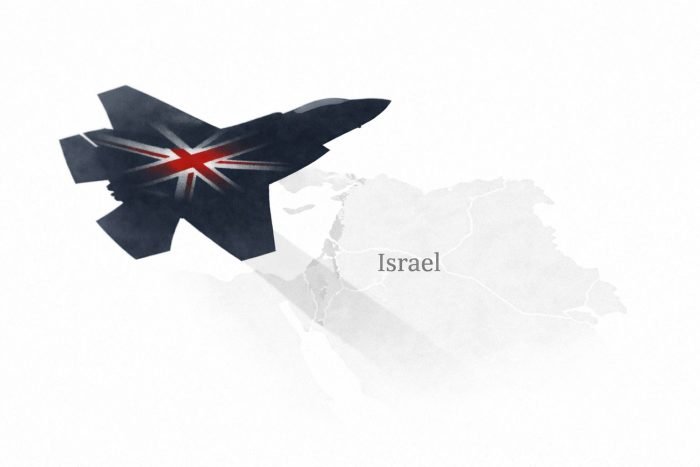
Britain maintains a close defence relationship with Israel through military cooperation, operational support and the export of weapons components, including key parts used in the F-35 fighter programme. Although the UK is not among Israel’s largest arms suppliers, British-made components and financial links within multinational defence projects have drawn scrutiny amid the heavy civilian toll of Israel’s military campaign in Gaza and broader allegations of violations of international humanitarian law.
Lebanon

Britain’s military relationship with Lebanon has focused primarily on security assistance to the Lebanese Armed Forces, including training, equipment donations and financial support aimed at strengthening border security and internal stability. Unlike many other regional partnerships, UK involvement has centred on capacity-building rather than large-scale arms exports, reflecting a strategy intended to stabilise the Lebanese state and support its official military institutions.
Oman
Britain maintains a close defence partnership with Oman centred on joint military exercises, training and long-term access to strategic facilities such as the UK Joint Logistics Support Base at Duqm. While this cooperation is framed around regional security and operational readiness, it has also attracted scrutiny given Oman’s restrictions on political freedoms and ongoing concerns about labour rights and treatment of migrant workers.
Qatar

Britain has deepened its defence relationship with Qatar in recent years through major arms exports, joint training programmes and the use of strategic facilities such as Al Udeid air base, which supports UK operations across the Middle East. While Qatar has not recently been directly involved in regional conflicts, the partnership has attracted criticism because of the country’s authoritarian governance and longstanding human-rights concerns, particularly regarding the treatment of migrant workers.
Saudi Arabia

Britain has maintained one of its closest defence relationships with Saudi Arabia through large-scale arms sales, military training and long-term cooperation agreements dating back to the Al Yamamah deals of the 1980s. This partnership has faced sustained criticism because UK-supplied aircraft, munitions, maintenance and training have supported Saudi-led military operations in Yemen, where coalition airstrikes have repeatedly been linked to civilian casualties and alleged violations of international humanitarian law.
Syria

Britain’s military involvement in Syria has centred on counter-terrorism operations against Islamic State through Operation Shader, which included airstrikes by the Royal Air Force and reported deployments of special forces. Although the campaign was framed as part of the international fight against ISIS, questions have been raised over civilian casualties from airstrikes, the transparency of official casualty reporting and the extent of British engagement with armed groups operating in the Syrian conflict.
Turkey

Britain’s defence relationship with Turkey includes the export of military components, cooperation in aerospace projects and industrial partnerships in advanced weapons systems. While these ties form part of broader NATO and defence-industrial cooperation, they have drawn scrutiny because British-made components have been used in Turkish drone systems and other platforms involved in military operations linked to civilian casualties and regional conflicts.
UAE

Britain maintains a close defence partnership with the United Arab Emirates through military cooperation agreements, arms exports and the operation of UK forces from facilities such as Al Minhad Air Base. This relationship has drawn scrutiny because the UAE has participated in the Saudi-led war in Yemen and has been accused of supporting armed groups in regional conflicts, raising questions about the implications of continued British military cooperation and defence exports.
Did you find this story interesting? Please support AOAV's work and donate.
Donate